Template-driven AI game maker vs Exekite: two approaches compared
Both tools promise to turn your ideas into playable games. But their approaches — and their output — are very different. Here's how a template-driven, mobile-focused AI game maker and Exekite compare.

Full disclosure: we made Exekite. We're one of the two products in this comparison.
We'll be as fair as we can. The template-driven tool we're comparing against does real things well, and we'll be specific about what those things are. But you should know who's writing before you read further.
Let's get into it.
Why people compare these two
If you're looking for an alternative to a template-driven, mobile-focused AI game maker, you've probably already spent time with it. Maybe you liked the clean interface and the speed of the workflow, but something about the final output felt... off. Maybe every game you generated had the same vibe as every other game you generated. Maybe you wanted to take your project to the App Store and hit a dead end.
Or maybe you're evaluating both tools before committing to either one. Smart move.
The template-driven approach and Exekite overlap on the surface — both use AI to help non-developers create games — but they diverge sharply in philosophy, output quality, and what "done" means. Understanding where they split will save you from investing weeks in the wrong direction.
Two different philosophies
Here's the core tension: Template-driven AI game makers optimize for a streamlined creation workflow. Exekite optimizes for a shippable end product.
The template-driven approach bets that the creation process should feel effortless. Clean UI, guided steps, template-driven generation. You pick a genre, describe your game, and the tool walks you through a polished pipeline that gets you to "playable" fast. The experience of making the game is the priority.
Exekite's bet is that the output should feel like a real game. The creation process is more opinionated and less hand-holdy, but the result has game feel, publishing capability, and source code you actually own. The experience of playing (and shipping) the game is the priority.
Neither bet is wrong. But they lead to fundamentally different tools.
Output quality and game feel
This is the biggest gap between the two platforms, and it's the one most people don't see coming until they've already invested time.
The template-driven tool produces games that look good in screenshots. The templates are well-designed, the UI is consistent, and the initial output has a visual polish that feels promising. For a first impression, it delivers. You show someone a screenshot and they're impressed.
Then you play it.
The movement feels like every other game you've played from this platform. The jump arc is the same default curve. Hit feedback is a score number floating up. Camera behavior is static. There's a sameness to the output that becomes obvious once you've generated three or four games — they feel like skins on the same skeleton, because to a meaningful degree, they are.
This isn't because the team behind the tool is doing bad work. It's a consequence of the template-driven approach. Templates give you a clean starting point, but they also give you a ceiling. When thousands of creators are building from the same underlying structures, the results converge. Your game looks like you made it, but it feels like everyone else's.
Exekite approaches generation differently. Instead of dressing up templates, it generates game-feel systems from the ground up with genre-aware tuning. A platformer gets coyote time, input buffering, squash-and-stretch, and camera smoothing calibrated for side-scrolling. A top-down action game gets different acceleration curves, different camera behavior, different hit feedback.
The result isn't perfect. No AI tool produces hand-tuned quality. But the baseline is different. Instead of "looks polished, feels generic," you're starting from "feels like a real game, needs your creative direction." That gap is harder to see in a screenshot and impossible to miss when you pick up the controller.
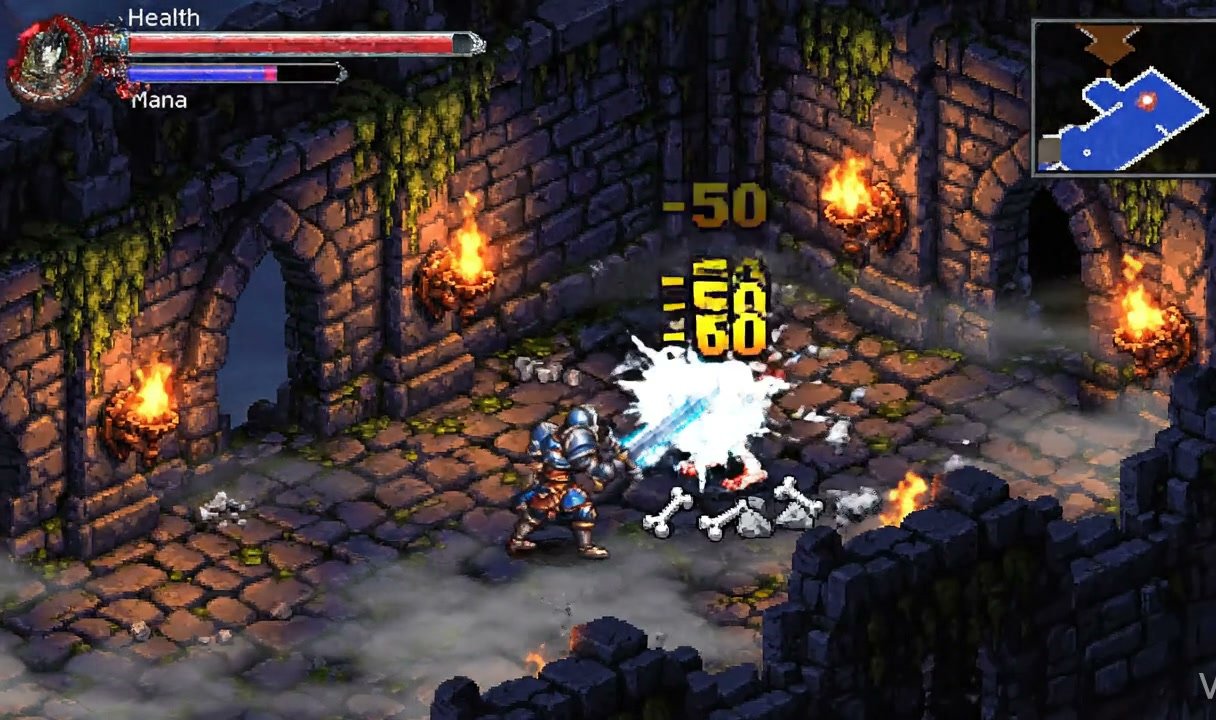
The template problem
This deserves its own section because it's the central tradeoff of the template-driven approach.
Templates are powerful. They compress complexity. They let you skip past blank-page paralysis and get to something tangible immediately. The templates in this tool are well-made, and for a certain kind of project — a game jam prototype, a class assignment, a quick experiment — they're more than enough.
But templates are also limiting in ways that aren't obvious at first.
When you build from a template, you're inheriting someone else's assumptions about how a game should work. The physics feel the way they set it up. The camera behaves the way they configured it. The progression system follows their structure. You can customize the surface — art, text, numbers — but the bones are fixed.
This is why experienced game designers talk about "template sameness." Play ten games from a template-driven tool in a row and you'll start recognizing the patterns. The platformers all jump the same way. The puzzle games all use the same interaction model. The RPGs all have the same combat rhythm. The games are different, but the feel is identical.
Exekite doesn't use templates in this sense. It generates game systems per-project, tuned to the specific genre and design intent. Two platformers built in Exekite will have different feel profiles because the generation responds to the specific design, not a shared skeleton.
This means Exekite's output is less predictable than the template-based approach — sometimes that's a good thing, sometimes it means you need to iterate more. But it also means your game doesn't feel like a reskin of everyone else's.
Publishing
This is the section where the comparison is most lopsided.
The template-driven tool is focused on mobile-native output, which is a genuine strength. The games it generates are designed for touch input and mobile screen sizes from the start. If you're making something specifically for phones, this mobile-first thinking is an advantage in the design phase.
But "designed for mobile" and "published to app stores" are very different things. This platform gets you a mobile-friendly game. It does not get you through Apple's review process, Android's build requirements, store listing creation, or any of the other steps between "I have a game" and "people can download my game." That last mile is on you.
Exekite was built around publishing as a core feature, not a future roadmap item. The platform includes a pipeline that takes your game from creation through building, packaging, and preparing for submission to the App Store and Google Play. You're not bolting on publishing after the fact — it's part of the workflow from the start.
If you've ever tried to manually take a game project and turn it into a store-ready app, you know this isn't a weekend project. It's weeks of dealing with certificates, build configurations, platform-specific requirements, icon sizes, metadata, and submission guidelines. Having that automated and integrated isn't a nice-to-have — for anyone who actually wants to ship, it's the difference between finishing and abandoning.
Bottom line: If you want to publish to app stores, Exekite handles the pipeline. If the template-driven tool's mobile-first design is enough and you'll handle distribution yourself (or don't need it), that's a valid path too.
Code ownership
This is one of those things that doesn't matter until it matters more than anything else.
The template-driven tool operates within its own ecosystem. You create in that environment, your game lives there, and the workflow is designed to keep you in that ecosystem. You can adjust and customize within the platform, but the model isn't "here's your source code, go do whatever you want with it." You're building on that platform.
This is fine for casual projects. It's a real problem for serious ones.
What happens if you want to bring in a developer to add a feature the tool can't generate? What happens if the platform changes its pricing, its terms, or its direction? What happens if you want to use a different tool for one part of your game and this one for another? Platform dependency is invisible until you push against it.
Exekite gives you the source code. Real files. Real ownership. You can open the project in your own editor, bring in collaborators, modify anything, or walk away from Exekite entirely and keep building independently. Your game is yours in the most literal sense.
If you're making something for fun and don't care about long-term ownership, this difference is academic. If you're making something you might commercialize, iterate on for months, or hand off to someone else, code ownership is non-negotiable.

Platform focus
The template-driven tool is mobile-first, and this shows in the design decisions throughout. Touch controls are a default consideration. Screen layouts are optimized for portrait and landscape mobile views. The games are meant to be played on phones.
This focus is a genuine strength if mobile is your target. You're not fighting the tool to make something that works on a small screen — it's the default assumption.
But mobile-first can also mean mobile-only in practice. If you want a desktop version, a web version, or a game that works across multiple platforms from the same source, this tight mobile focus becomes a constraint rather than an advantage.
Exekite targets web, iOS, and Android from the same project. One creation process, multiple build targets. The tradeoff is that Exekite isn't as laser-focused on mobile as a dedicated mobile-first tool — you're working with a cross-platform framework rather than a mobile-native one. But the flexibility of shipping everywhere from one codebase is significant if your goals extend beyond a single platform.
Customization depth
The template-driven tool offers customization within the boundaries of its templates. You can change visual themes, adjust difficulty numbers, swap out assets, modify text and dialogue. For surface-level customization, it's smooth and intuitive. The UI makes it easy to tweak things without touching code.
Where it gets frustrating is when you want to change something structural. You want a different jump mechanic than what the template offers. You want combat to work in a way the system wasn't designed for. You want a progression system that doesn't match the template's assumptions. At that point, you're fighting the tool rather than working with it.
Exekite is more opinionated about how you customize but less restrictive about what you can customize. Because you have access to the actual source code, nothing is truly off-limits. You can change anything — physics, camera systems, game logic, UI, progression. The tradeoff is that deeper customization requires understanding code, or at least being willing to work with AI-assisted code editing.
For light customization, the template-based approach is friendlier. For deep customization, Exekite's approach is more capable. Where your project falls on that spectrum determines which tradeoff serves you better.
Where the template-driven tool is the better choice
Being fair:
It's better if you want a guided, frictionless creation experience. The UI is clean, the workflow is intuitive, and you never feel lost. If the creation process itself is important to you — if you want it to feel good, not just produce good output — this tool is well-designed.
It's better if you're building specifically for mobile and don't need publishing support. The mobile-first design means you're not adapting a generic tool to a mobile context. The games are built for phones from the start.
It's better if you want polished visuals fast. The template-driven approach means the visual quality of the output is high and consistent. If how the game looks in a screenshot matters more than how it feels in your hands, this platform delivers.
It's better if you want a streamlined, all-in-one experience. Everything happens in one place, the interface is cohesive, and you don't need to think about external tools, build systems, or source code. For some people, that simplicity is the most important feature.
Where Exekite is the better choice
Exekite is better if game feel is a priority. If you've played AI-generated games and thought "technically it works but it doesn't feel like a game," Exekite's approach to baking polish into generation addresses that specific frustration.
Exekite is better if you want to publish to app stores. The publishing pipeline is built in. The template-driven tool gets you a mobile-friendly game; Exekite gets you a mobile-friendly game on the App Store.
Exekite is better if you want to own your code. Full source, no lock-in, real files. Your project survives independent of the platform that created it.
Exekite is better if you want your game to feel unique. The non-template approach means your game's feel isn't a copy of everyone else's. It's generated for your specific project, not pulled from a shared library.
Exekite is better if you're targeting multiple platforms. Web, iOS, Android from the same project. One workflow, multiple destinations.
The honest weaknesses
We've covered where each tool wins. Here's where each falls short — including us.
The template-driven tool's honest weaknesses: Template-driven sameness is real. The deeper you go, the more you feel the constraints. Limited customization below the surface layer. No built-in path to app store publishing. Platform lock-in means your game depends on that platform's continued existence and direction.
Exekite's honest weaknesses: We're newer. The community is smaller. There are fewer examples to learn from. The platform is more opinionated, which means a steeper learning curve. The creation experience isn't as smooth or guided as the template-driven approach — we've prioritized output quality over input experience, and that's a real tradeoff. If you just want to play around and have fun making something, Exekite can feel like it's taking itself too seriously.
We're working on all of these. But they're real today.
Which is right for you
Here's the framework:
Choose the template-driven tool if:
- The creation experience matters as much as the output
- You're building for mobile and don't need app store publishing
- Template-driven consistency is a feature, not a bug, for your use case
- You want a streamlined, all-in-one environment
- Quick visual polish matters more than deep game feel
Choose Exekite if:
- You want to publish to the App Store or Google Play
- Game feel and uniqueness matter more than creation speed
- You want full ownership of your source code
- You're targeting multiple platforms from one project
- You're building something you intend to ship, maintain, and potentially monetize
Or use both. Prototype with the template-driven tool to validate the concept and nail down the visuals, then build the shippable version in Exekite when you're ready to commit to publishing. Different tools for different stages. No rule says you have to pick one.
Final thought
Both tools are serious products built by teams that care about making game creation accessible. They just disagree about what matters most — the creation experience or the created thing.
If you want a clean, guided workflow that gets you to a good-looking game fast, a template-driven AI game maker is a strong choice. If you want a game that feels unique, ships to real platforms, and belongs entirely to you, that's the problem we built Exekite to solve.
Try both. The right one will be obvious once you use them.